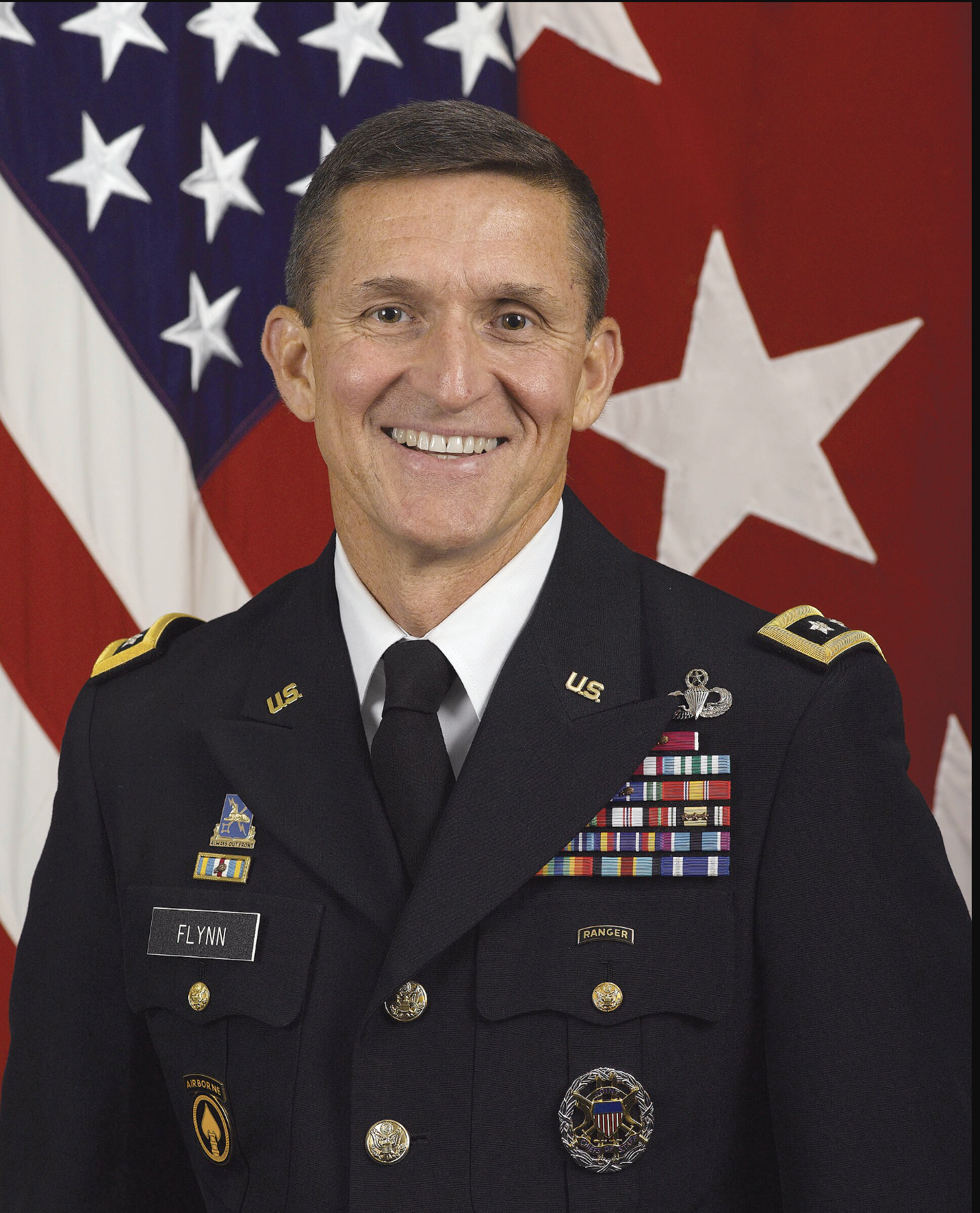
By Lieutenant General Michael T. Flynn, U.S. Army, Retired
Guest contribution to the Counterlawfare Institute
Lawfare Is a System
We are in a war. The war that we are currently in is called lawfare, and I think people need to understand what that actually means because lawfare is a strategic descriptor. Down below that are armies, weapon systems, strategies, logistics, sustainment, financing, communications, and all of the things that an army needs to be able to fight.
When you look at the people who have been waging lawfare in this country, they have those things in droves and in abundance. They have enormous resources, they have people inside institutions, they have a legal system that they know how to manipulate, they have a very big voice through the corporate media, and they have financing that comes from all kinds of places, including taxpayers who often have no idea what they are paying for.
When you look at our side, we are not organized in anything approaching the same way. We are not well coordinated, and for a very long time, people who found themselves on the receiving end of lawfare were largely left to fight on their own.
That was certainly true in my case.
When I was going through what I went through, I did not understand lawfare the way I understand it today. I do not think anybody really did. What became clear to me over time was that I was dealing with an entire system. It was the FBI and the Department of Justice, it was prosecutors, it was the intelligence community, it was elements of the judiciary, it was the corporate media, it was the Washington legal establishment, and it was people inside both political parties who were perfectly willing to go along with what was happening.
That is one of the most important lessons people need to take from the last ten years. Lawfare is a system, and when that system decides that somebody has to be taken out, all of these different pieces can begin to coalesce around the same objective.
In my case, I learned that even the lawyers who were supposed to be representing me could become part of the problem. I spent years watching information come out that should have changed everything, while my own legal team was not demanding the material that should have been demanded. I went through 19 separate cooperation sessions with the Mueller investigation, sometimes for hours at a time, while prosecutors continued trying to get something from me that was not there. I watched the legal system continue after the Department of Justice itself had moved to dismiss the case. I watched Judge Emmet Sullivan turn what should have been the end of the case into another eight months of financial and personal punishment.
That experience taught me that if you are going to counter lawfare, you have to understand the entire system you are facing.
Thinking About Counterlawfare Strategically
That is why I believe the Counterlawfare Institute can become important, because somebody has to begin thinking about this strategically.
The challenge for the Counterlawfare Institute is enormous because there are hundreds of examples out there across America. People have been coming to me for years with documentation showing what has happened to them. They are not former National Security Advisors. They are not generals. They are Jane and Joe America, and suddenly they have the Department of Justice, a prosecutor, a government bureaucracy, or some other institution coming down on them. They do not know where to turn, so sometimes they come to people like me and ask whether I know a lawyer or whether I can get their case in front of somebody.
That is not a system. That is people trying to survive one case at a time.
A serious counterlawfare effort has to begin by recognizing that it cannot do everything at once. The Counterlawfare Institute is going to have to radically prioritize what it counters because there are simply too many things happening, too many cases, too many institutions involved, and too many people who need help.
That is exactly what happens in warfare. You have limited resources, so you decide where those resources can have the greatest effect. You decide which fights matter most, what objective you are trying to achieve, what you need in order to achieve it, and then you organize yourself around that objective.
Logistics, Sustainment, and the Battlefield
You also have to understand logistics, because you cannot go to war without logistics. You cannot go to war with some infantry and some rifles and expect that to last very long. You have to have logistics, sustainment, planning, strategic direction, intelligence, communications, and the backing required to continue the fight.
The same thing applies to counterlawfare.
If you are going to reconstruct what happened in Russiagate, for example, that takes years of work. Documents have to be found and preserved. People have to understand how the intelligence community worked, how the FBI worked, how the legal system worked, how the media operation worked, how the political operation worked, and how all of those things interacted with one another. The same applies when you look at January 6 or other cases where Americans have found themselves up against enormous institutions with enormous resources.
You cannot simply show up after somebody has been indicted and assume that hiring a lawyer solves the problem. By that point, the machinery may already have been moving for months or years.
That is why documentation matters so much. People need to understand what happened before, who was involved, what techniques were used, what institutions were involved, and where the same methods show up again.
If you are going to fight intelligently, you have to understand the battlefield.
Task Organizing for the Fight
There is another military concept that I think applies directly to what the Counterlawfare Institute is trying to build, and that is task organization.
In combat, you task organize for the mission. You may take Army elements, Air Force elements, Marine elements, intelligence assets, and, depending on where you are operating, indigenous forces, and bring those capabilities together because that particular fight requires that particular combination.
Counterlawfare should work the same way.
You may need a task force to fight the Russiagate battle, and that task force may require lawyers, investigators, intelligence experts, journalists, researchers, people who understand congressional oversight, and people who were directly involved in what happened. You bring those people together around that fight. When that fight is over, you do not necessarily need the same task force anymore. You reorganize around the next objective.
That ability to task organize is important because the opposition does not stand still.
The Enemy Has a Vote
People who have studied warfare know the phrase “the enemy has a vote.” You can have a plan, and you can believe it is a good plan, and then the enemy reacts to what you are doing.
The same thing is going to happen here. The Counterlawfare Institute will have a mission statement. It will publicly identify things that it is working on. The people on the other side will see that. They will respond. They will push back in one place, open another front somewhere else, attack the organization, attack the people involved, attack the funding, or change tactics.
That means you have to be able to adapt.
You are never going to outspend these people. You have to outsmart them.
That requires people who understand the difference between reacting to whatever happened on television today and thinking strategically about where all of this is going.
One of the things we have been too slow to understand is that the people on the other side have been thinking this way for a very long time. They have the intent, they have the resources, they have leadership, and they have control over large swaths of important institutions. When one option does not work, another option is available. When one operation fails, another one begins. They have people standing by, they have legal theories ready, they have organizations ready, and they have communications systems ready to explain the next version of events to the public.
That level of organization has to be understood before it can be countered.
Building Something That Lasts
President Trump will only be president for a limited period of time. Whatever he is able to accomplish, lawfare has been developing for much longer than one presidential administration, and it is going to require an effort that can survive beyond one presidential administration.
That is why I applaud what Hans Mahncke and the Counterlawfare Institute are trying to build.
The Institute is going to need teammates. It is going to need people with different capabilities who can come together around specific fights. It is going to need the logistics and sustainment that allow serious work to continue after everybody else has moved on to the next news cycle. It is going to have to prioritize, because it cannot fight everything. It is going to have to learn from every battle, because the enemy has a vote. And it is going to need the backing of Americans who understand that institutions like this cannot fight without support.
The people who built the lawfare system have armies, weapon systems, strategies, logistics, sustainment, money, and enormous institutional power.
We have spent too much of the last decade fighting them individually and learning the same lessons over and over again.
Counterlawfare has to become organized, strategic, and sustainable, because this fight is going to be with us long after the current political moment has passed.